
In Brookmill Park

It is just a sliver of land in Zone 2. Its previous name Ravensbourne Park, matching the river that runs through it, still sits in wrought iron above the main entrance, far too elegant to replace. Its current name a reference to the silk mills that once lined the River Ravensbourne, this small tributary of the mighty Thames, which wends its way down past the DLR line to Lewisham, where it there becomes the delightfully named River Quaggy.
I have had the privilege of Brookmill Park on my doorstep for nearly five years now. The top half, towards Deptford, is highly cultivated. Wisteria adorns the brick-lined paths which flank flowerbeds and a water feature. Phlegmatic foxes weave around the benches where men congregate to play music, smoke, chat. But the lower half, which I can see above my half-frosted sitting room windows, is much wilder, a nature reserve barely contained by concrete and fencing. In winter, the banks below the footpath are barnacled with deadened branches that in spring burst full into life, an impossible abundance of greenery and bluebells. There isn’t a gladder sight than when the cherry plum trees bloom, heralding longer, warmer days to come. In summer, people forage its fruits.
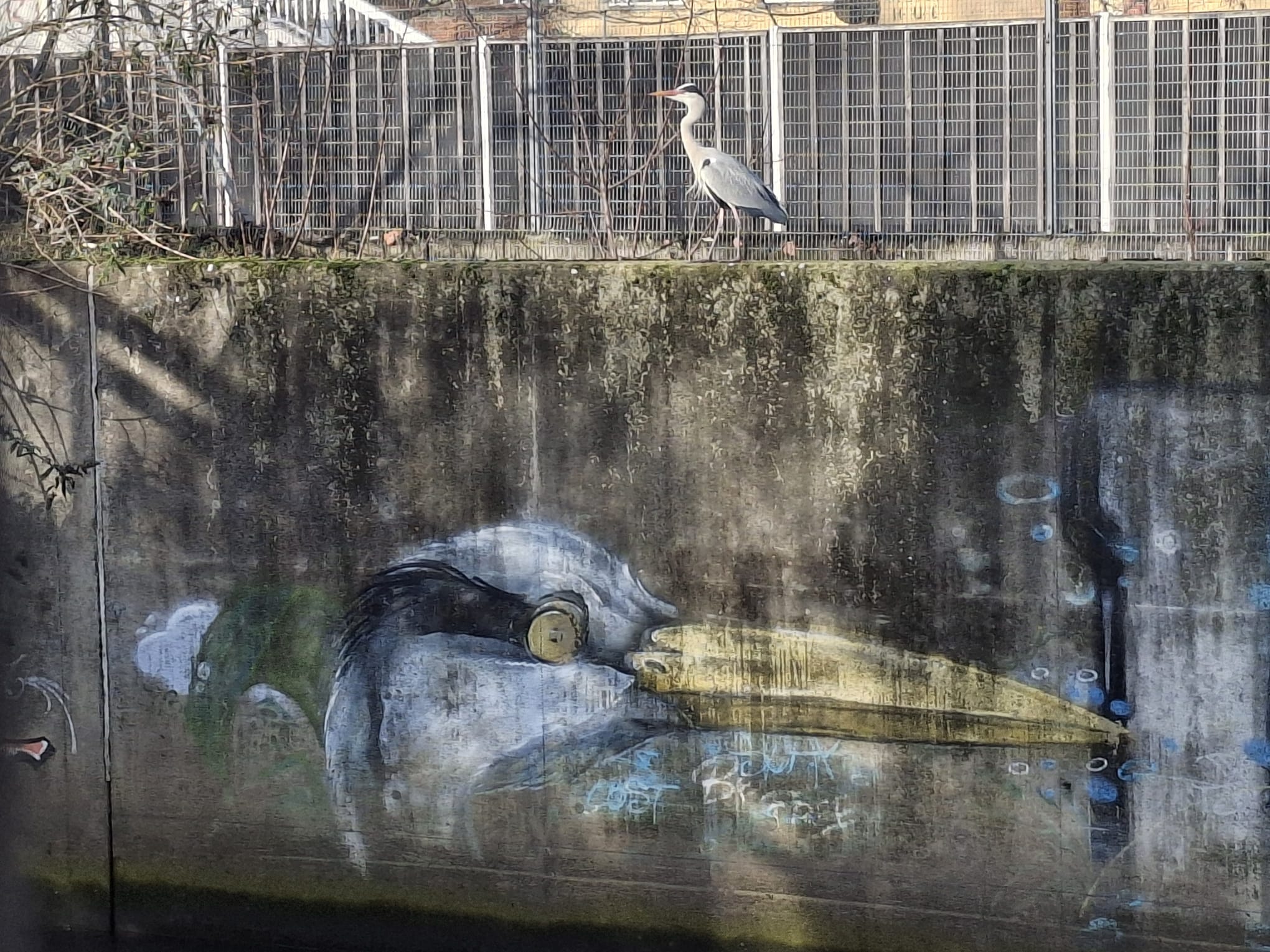
Whatever the season, the park is always alive. Those foxes, one in particular with a recognisably bent tail and an appalling case of mange, trundle around the further bank - unreachable by human feet unless you’ve brought your waders - or sleep in pools of sunlight, framed by graffiti splashes. The ducks, coots and moorhens pace leisurely through the waters. Robins and wrens bustle through the undergrowth. Sometimes a cormorant will glide through and land mutely in the river, diving for a time to hunt for eels. The herons sit like sentinels on fallen trees and branches, hunched against the cold or basking in midsummer sun. At night, they bark in the darkness, like the foxes.
The herons have become unexpected celebrities, to the extent that they now have their own mural on the far wall of the park. Every February people gather to spot the newly-hatched chicks, fluffy petrol-blue heads peeping out from lovingly built nests. Nature’s cruelty is sometimes felt starkly with their growing population. One of last year’s chicks was nabbed by a fox. Last spring a duck hatched twelve ducklings, and the pond team updated their chalk board with the news that all twelve had been eaten by the herons, apparently encouraged in their appetites by people hand-feeding them. Their message ended with an apology in advance to the moorhen who was presently building her nest on the pond’s small island; a forlorn omen. I have seen the elderly couple who feed those herons with raw chicken breasts, flinging them bare-handed straight from a shopping bag as the birds follow them doggedly through the park. Just as the animals can’t be tamed, neither, it seems, can the will of eccentrics.
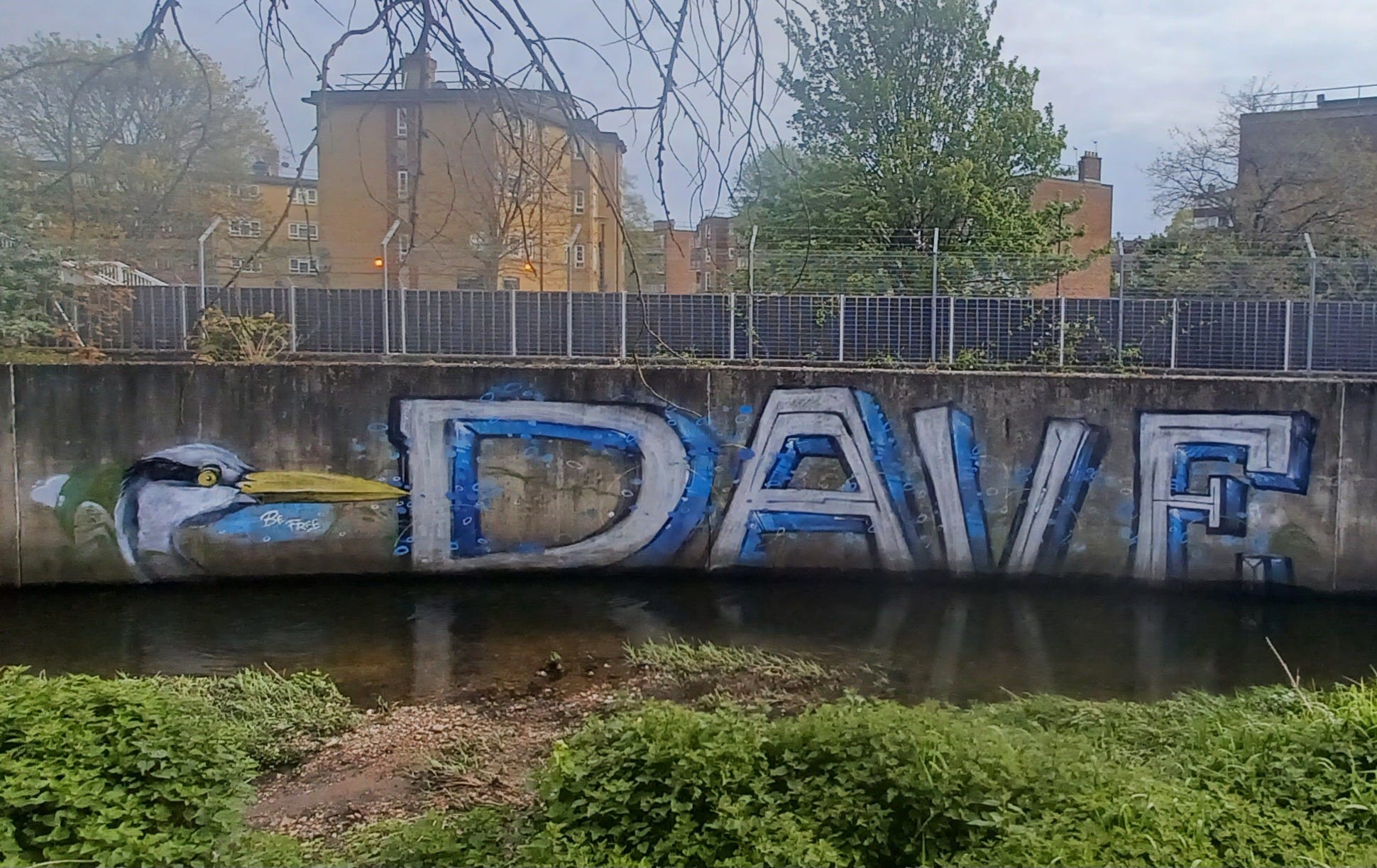
You may witness more of wildlife here in a couple of minutes than you would in the deepest countryside. People come to get photos of the herons and their chicks, with expert lenses or with smartphone cameras, and end up spotting the cerulean flash of the kingfisher, or following the echoing drills of a spotted woodpecker to its tree. Someone once got a photo of a fox fast asleep in the large heron nest that hangs over the river.
The nature reserve is a wonder, but so too is how it embraces people amidst its branches and tendrils. The trunk of a fallen tree is a perfect spot to sit and watch the river’s pace, and I’ve seen two particular friends return there again and again when the weather gets warmer. A couple of summers ago, a young man camped out on the riverbanks; a mattress, a cooking pot, a small fire crackling. We watched him potter about, pleased he had found such a bucolic haven, and hoping he would be allowed to keep his patch. Two days later, he had clearly been moved on. I have seen people foraging for greens near the DLR footbridge, and a makeshift camp with a Union Jack tied to a large stick.
In Andrew Finch’s 2023 documentary The Love Below, which explores the waterways of South East London, local artist Jack Thurgar described a piece of local folklore he had been told as a child by some older boys - that of the Lewisham Natureman. The Natureman’s sigil has been found carved into the waterways of the Quaggy and the Ravensbourne, a crown similar to the Lewisham Borough logo, with a thistle or dandelion growing from it. In the documentary, Jack also pointed out the murals of a white stag found along these waterways, which have become attributed to the Natureman, and there is a white stag mural dedicated to him near Lewisham Station. White stags are often seen as guardians of the forest, and so too these murals herald the Lewisham Natureman as a guardian of these waterways, standing vigil as they course like South East London’s lifeblood beneath the murky streets.
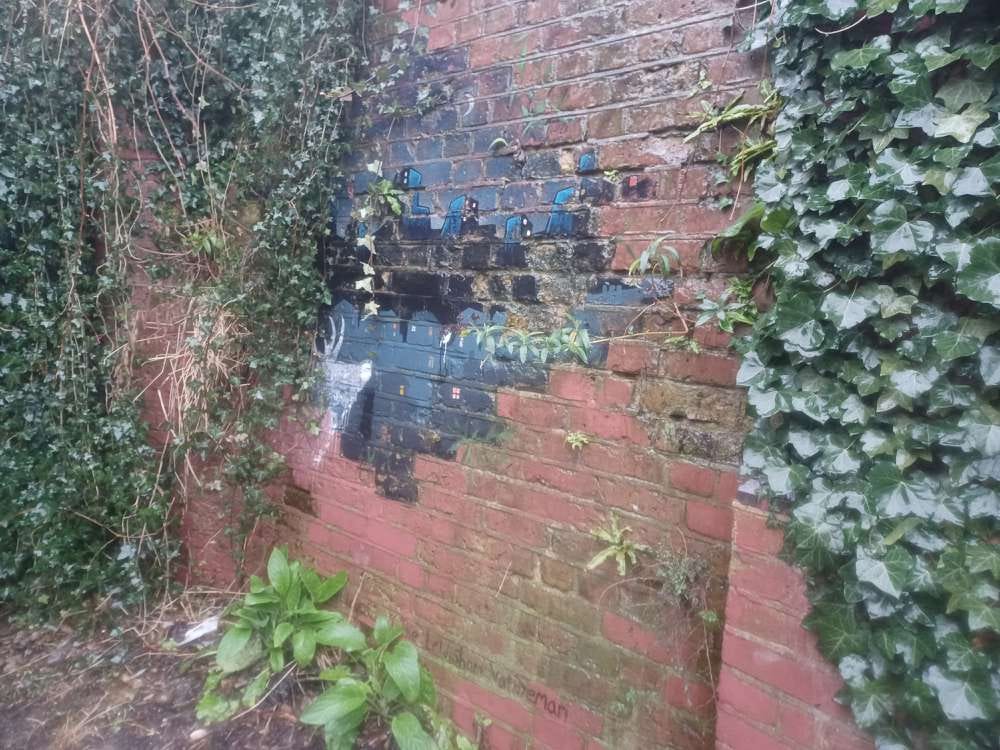
For me, the Lewisham Natureman’s throne is Brookmill Park, his mantle a drapery of bramble and thorn adorned with birds and foxes. I feel his presence there most powerfully. When I venture out for a minute or two to breathe in this haven I have come to love so dearly, and I see others taking a small break on the bench, or lingering to watch the herons, I think of that wonderful line by W.H. Davies:
What is this life if, full of care,
We have no time to stand and stare?
so stunning kirsty!